_edited.png)
The Truth About Chicken: Debunking Myths in Pet Nutrition

Updated: Oct 1

Chicken has become one of the most demonised proteins in modern pet nutrition. Many dog owners now confidently state that their pet is “allergic to chicken.” This belief is often reinforced by veterinary clinics, online education, and increasingly, veterinary influencers on social media.
One recent example comes from Australian veterinarian and social media figure Dr Will Maginness. He publicly stated that chicken is the worst protein to feed dogs and that he would not include it in his upcoming pet food. In his post, he cited factory farming, rapid growth rates in modern chickens, and the idea that dogs have been “absolutely smashed with chicken for decades.” This, he claims, leads to chronic immune and gut dysfunction. His proposed solution? Remove chicken.
This position is not unique to Dr Will. It reflects a much broader narrative within the veterinary and pet food industries. But it is also a clear example of how reductionist thinking, amplified through social media and aligned with product marketing, can oversimplify complex biological systems.
Understanding the Evolutionary Perspective
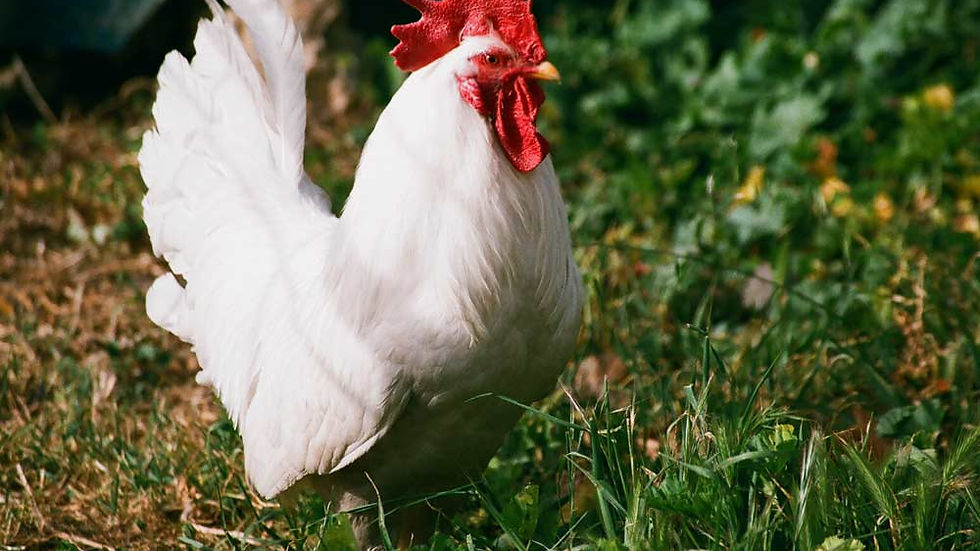
From an evolutionary perspective, the idea that chicken is inherently unsuitable for dogs does not hold up. Wolves and wild canids have consumed birds for millions of years. A whole bird is a complete prey animal containing muscle meat, bone, skin, connective tissue, fat, and organs. Poultry is not a novel food, nor is it biologically inappropriate for a carnivorous or facultative carnivorous species.

Why Has Chicken Become the Villain?
So why has chicken become the villain? The answer lies not in chicken itself, but in how it has been used.
Chicken is one of the most commonly fed proteins in both human and pet diets, particularly in Australia. In humans, chicken is the most consumed meat, yet it is not one of Australia’s major food allergens. Our most common allergens are dairy, egg, peanuts, tree nuts, wheat, soy, and seafood. Chicken does not appear on priority allergen lists because true poultry allergy is rare at a population level. This alone highlights a crucial point: high exposure does not equal inherent allergenicity.
The same logic applies to dogs.

The Misunderstanding of Food Allergies
In veterinary dermatology literature, chicken often appears on lists of “common food allergens,” alongside beef and dairy. These lists reflect frequency of exposure, not biological danger. Chicken appears because it has been fed early, frequently, and continuously, often in highly processed forms, for years on end. If kangaroo or rabbit had been used in the same way for decades, they would now occupy the same position.
Although some dogs do have allergic reactions to chicken, there is no evidence that chicken contains a unique protein making it inherently more allergenic than other animal proteins. There is no identified poultry-specific immune mechanism or breed-wide intolerance. Studies indicate that frequent exposure and diet history are far stronger drivers of reactions than the species of protein itself. From an immunological standpoint, chicken is unremarkable.
The Importance of Context
What does matter is context.
Most dogs labelled as “allergic to chicken” are not reacting to a whole bird eaten with bone, skin, connective tissue, and the physical work of chewing. They are reacting to rendered meals, hydrolysed fragments, oxidised fats, and monotonous feeding patterns. They are eating the same protein, prepared the same way, at the same frequency, often without fasting, often without variety, and often without any structural food that engages the jaw, nervous system, and digestive process properly.
When chicken is removed from these diets, many variables change at once. Protein source changes. Processing changes. Fat profiles shift. Antigen monotony is broken. Sometimes overall food quality improves. Symptoms improve, and chicken is blamed. But improvement after removal does not prove chicken was the cause. That conclusion reflects reductionist medicine, not systems biology.
True IgE-mediated food allergy in dogs is relatively uncommon. Many cases labelled as “chicken allergy” are more accurately described as food intolerance, dysbiosis, chronic inflammatory skin disease, or immune dysregulation influenced by diet and feeding pattern. It is far easier, and far more marketable, to name a single protein than to address feeding frequency, lack of fasting, ultra-processed textures, chronic overfeeding, and the absence of whole-prey structure.

The Omega-6 Debate
Omega-6 fatty acids are another area where chicken is unfairly criticised. Chicken does contain omega-6 fats, but omega-6 is an essential fatty acid required for normal immune function, skin health, and cellular signalling. The problem has never been omega-6 itself, but imbalance, oxidation, and processing. Many criticisms of “high omega-6” in chicken actually stem from kibble formulations, where omega-6 can be artificially high due to added vegetable oils, and where only a minimum requirement is set, not a maximum. Any difference in omega-6 between chicken and beef reflects how the animal metabolises its food, not a biological flaw in chicken itself. This is often misrepresented as a problem inherent to chicken, when it is in fact an artifact of how industrial diets are formulated.
The Role of Influencer Culture
This is where influencer culture becomes relevant.
Dr Will is a qualified veterinarian, but he is also a rapidly growing online personality and the founder of a premium pet food brand. When strong nutritional claims align perfectly with the exclusion criteria of a product being sold, that alignment deserves scrutiny. This does not require assuming harmful intent. It simply requires acknowledging incentives. Simplified villains create clear solutions, and clear solutions sell products. This dynamic is not unique to one individual. It is the modern pet food industry at work, operating through social media rather than supermarket shelves.
The Loss of Nuance
What is lost in this process is nuance.
Chicken is not a single thing. A rendered chicken meal in kibble is not biologically equivalent to a whole chicken fed with bone, skin, cartilage, and connective tissue. Feeding mush twice a day without fasting is not the same as feeding structured prey that must be worked through. The act of eating matters. Structure matters. Pattern matters.
The widespread belief that chicken is inherently problematic for dogs is not supported by evidence. It is supported by repetition, industry habits, clinical shortcuts, and marketing narratives that reward simplicity over biological truth.
Chicken is not the villain. Repetition, processing, and reductionist thinking are.
Until we move away from blaming single ingredients and towards understanding whole biological systems, the myth will continue to thrive, regardless of who is repeating it.
Conclusion: Embracing Holistic Wellness
In the quest for holistic wellness, we must embrace a broader understanding of pet nutrition. It’s time to look beyond the myths and focus on what truly matters: the overall health and vitality of our beloved companions. By prioritising species-appropriate nutrition and natural therapies, we can guide our pets toward a healthier, happier life.
Tristan Harris
Madra Pet Wellness


Comments